

Artificial intelligence is changing how businesses use information. From analyzing documents to identifying unusual activity, AI can help teams work faster and make better-informed decisions.
However, successful adoption requires clear objectives, reliable data, and people who can evaluate the results.
« Understanding Artificial Intelligence »
Artificial intelligence refers to systems designed to perform tasks such as recognizing patterns, interpreting language, generating content, and making predictions.
In a business environment, these capabilities can support everyday activities: summarizing reports, classifying requests, exploring data, or assisting customer service teams.
The starting point is a practical question: which task could AI help improve, and how will we measure that improvement?
Reliable Data Makes AI More Useful
The usefulness of an AI system depends partly on the information it receives. Missing records, outdated documents, or inconsistent definitions can lead to misleading results.
For example, a sales forecast built on incomplete transaction history may overlook important patterns. An internal assistant using outdated procedures may give employees incorrect guidance.
Preparing data therefore involves several essential steps:
-
Check quality: identify missing values, duplicates, and inconsistencies.
-
Provide context: explain what fields and business indicators mean.
-
Keep information current: update the sources used by the system.
-
Manage access: ensure users can only retrieve information they are authorized to view.
A strong data foundation makes AI outputs easier to assess and use.
Practical Applications Across the Business
AI can support different teams when it is applied to a clearly defined need.
Faster Access to Information
An internal assistant can help employees find answers across approved documents. Providing references to the source material allows users to check the answer before acting.
Support for Data Analysis
AI can help summarize trends, suggest questions to investigate, or explain a report in accessible language. Analysts remain responsible for checking calculations and interpreting the findings.
Assistance with Routine Tasks
Document classification, draft preparation, and request routing are examples of tasks where AI can reduce manual effort. Review steps help teams catch mistakes and manage exceptions.
Support for Technical Operations
AI can help summarize incident information or highlight patterns in monitoring data. Technical teams must confirm the cause of a problem and validate any proposed changes.
Connecting AI with Database Monitoring
Databases support many of the applications and information sources that businesses rely on. Their availability and performance remain essential when introducing AI.
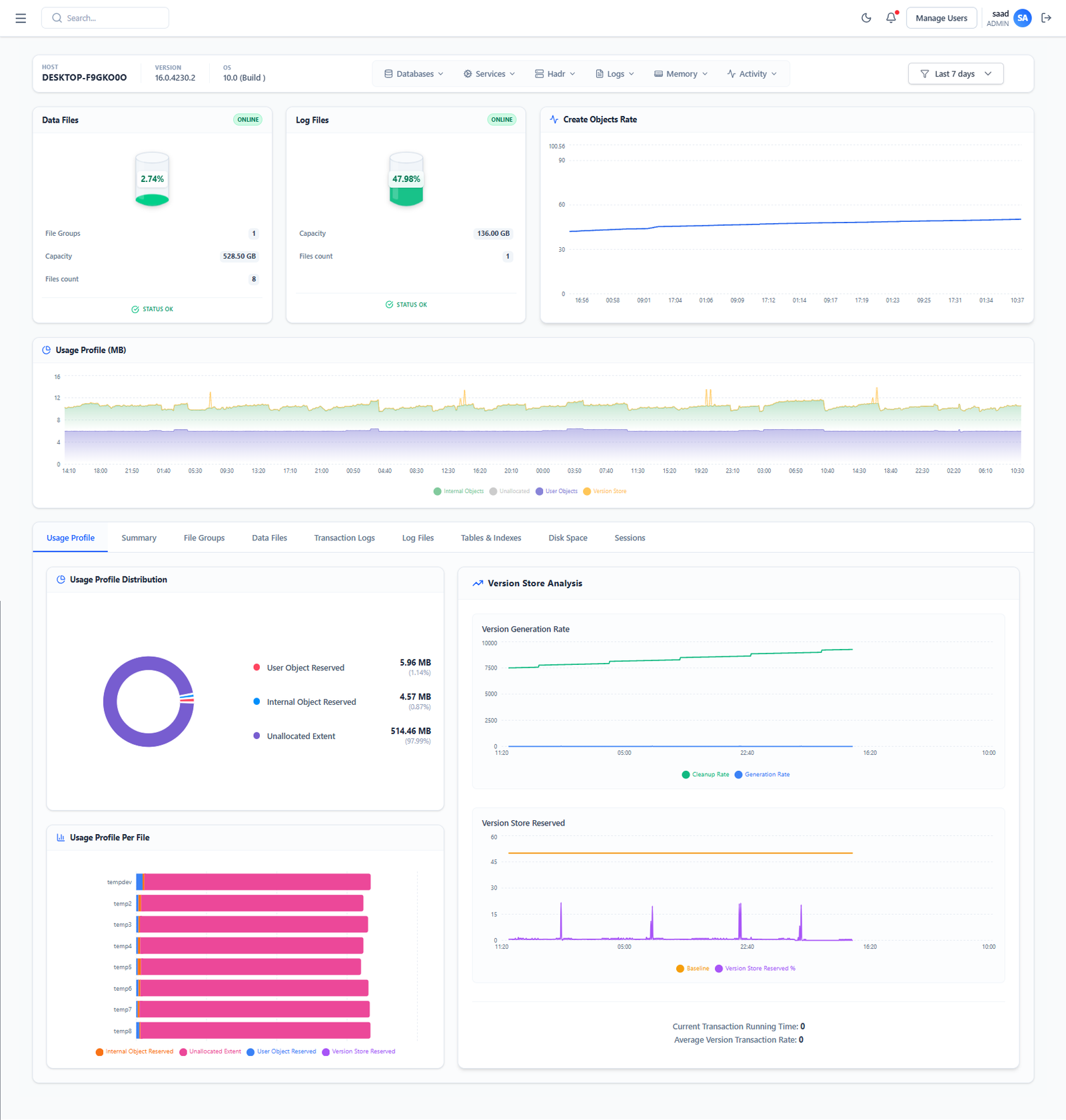
Monitoring provides visibility into resource usage, query performance, storage growth, and system activity. These indicators help teams understand whether new workloads are affecting existing services.
For example, an application that introduces AI-assisted search may generate additional database requests. Monitoring can help teams assess the impact and decide whether query optimization, connection management, or additional capacity is needed.
AI projects need reliable infrastructure as well as suitable data.
Keeping People in Control
AI-generated answers can be inaccurate, incomplete, or expressed with more confidence than the evidence supports.
The level of human review should match the consequences of an error. A draft summary may need a quick check, while a recommendation affecting production systems requires careful validation.
Clear responsibilities help teams use AI effectively:
-
Define who reviews outputs.
-
Establish which actions require approval.
-
Keep source information available for verification.
-
Record errors and use them to improve the workflow.
Start Small and Measure Results
A focused pilot gives businesses an opportunity to evaluate AI before expanding its use.
Choose one task, establish its current performance, and define success criteria. These might include time saved, answer accuracy, fewer manual corrections, or improved response times.
Evaluate the benefits alongside the cost of implementation, maintenance, and human review. Expand the solution when the results justify it.
Building Lasting Value with AI
Artificial intelligence creates opportunities to make information more accessible and daily work more efficient. Lasting value comes from connecting those capabilities to real business needs.
With reliable data, well-managed infrastructure, and appropriate human oversight, organizations can build AI solutions that support their teams and their growth.
Looking to strengthen the data foundation behind your AI projects? Contact MyDBlink to discuss your database, monitoring, and data management needs.

3 Comments
Veniam culpa omnis ut ut sint. Dolores aut ut voluptatibus ratione. non consequatur consequatur sint earum. Et nostrum voluptatibus ut impedit dolores quasi.
Explicabo tempora ad quos ipsum. necessitatibus quibusdam rerum. Eveniet deserunt assumenda quidem. et deleniti est. neque quisquam porro. Maiores molestiae ut cupiditate voluptas. Expedita qui omnis repellendus. Vero sint reiciendis ad et. Expedita molestiae animi. Sed assumenda doloremque quas aspernatur et deserunt. Aut earum temporibus possimus sint voluptatem. Nemo dolore itaque similique. Molestiae quam sunt officiis sed. at iure nemo esse sed Vel autem minima aperiam culpa error.
Quidem minus ut. quia perspiciatis. tempore qui quae Dolorum velit ut amet et. veritatis perspiciatis molestiae assumenda omnis ut officiis. nisi numquam veritatis sapiente dicta maxime Impedit qui labore culpa sint. Pariatur sequi non rerum sed in. Aut sint reiciendis repellat est nihil.